3D printing & STL6 min read
Drain holes for hollow resin prints: how many, how big, where
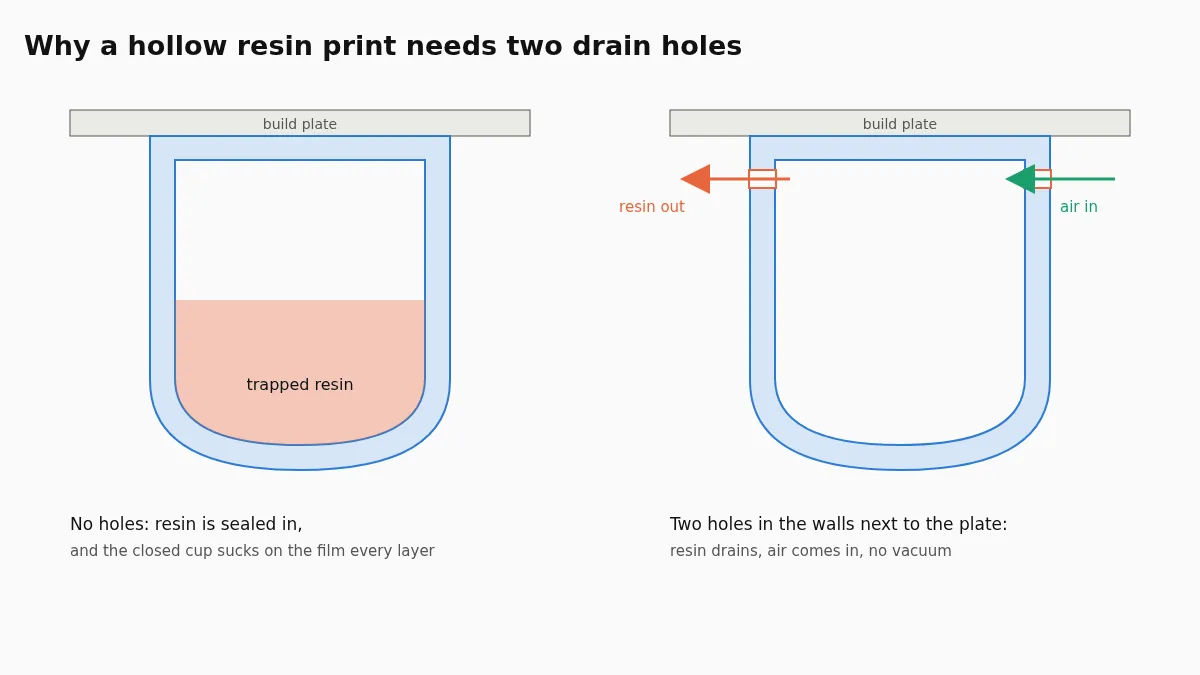
Why a hollow resin print needs two drain holes per cavity, where they go, how large they should be and how to plug them, with the published Formlabs minimum.
STL file size, mesh repair and pre-slicer checks.
Why a hollow resin print needs two drain holes per cavity, where they go, how large they should be and how to plug them, with the published Formlabs minimum.
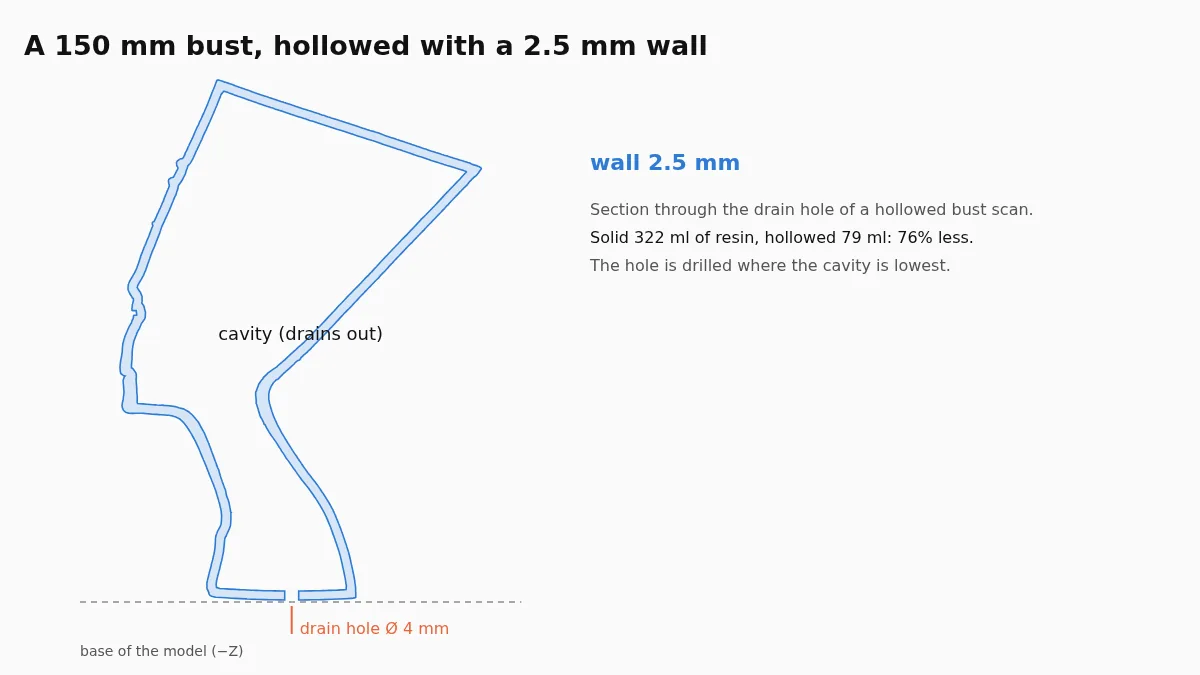
Measured resin savings on seven scans, how thick the wall should be, where the drain holes go and why thin figures save less. With an online hollowing tool.
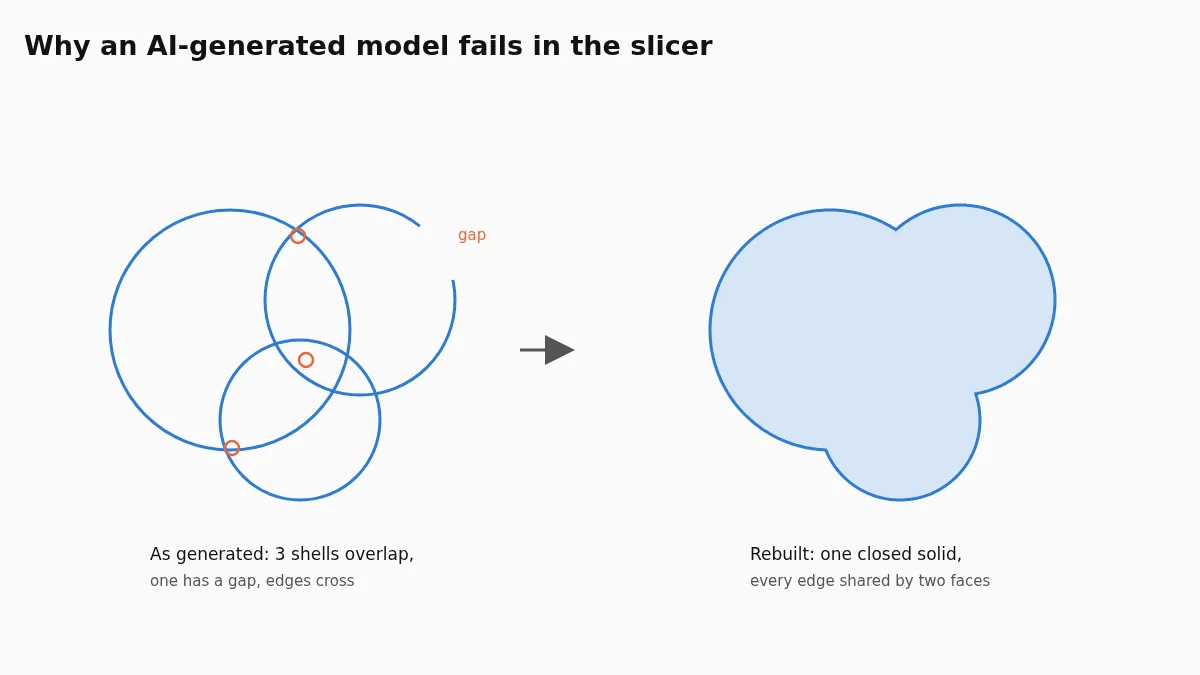
Overlapping shells, holes and flipped faces from Meshy, Tripo or Rodin explained, the three ways to fix them, and a measured before-and-after of a rebuild.
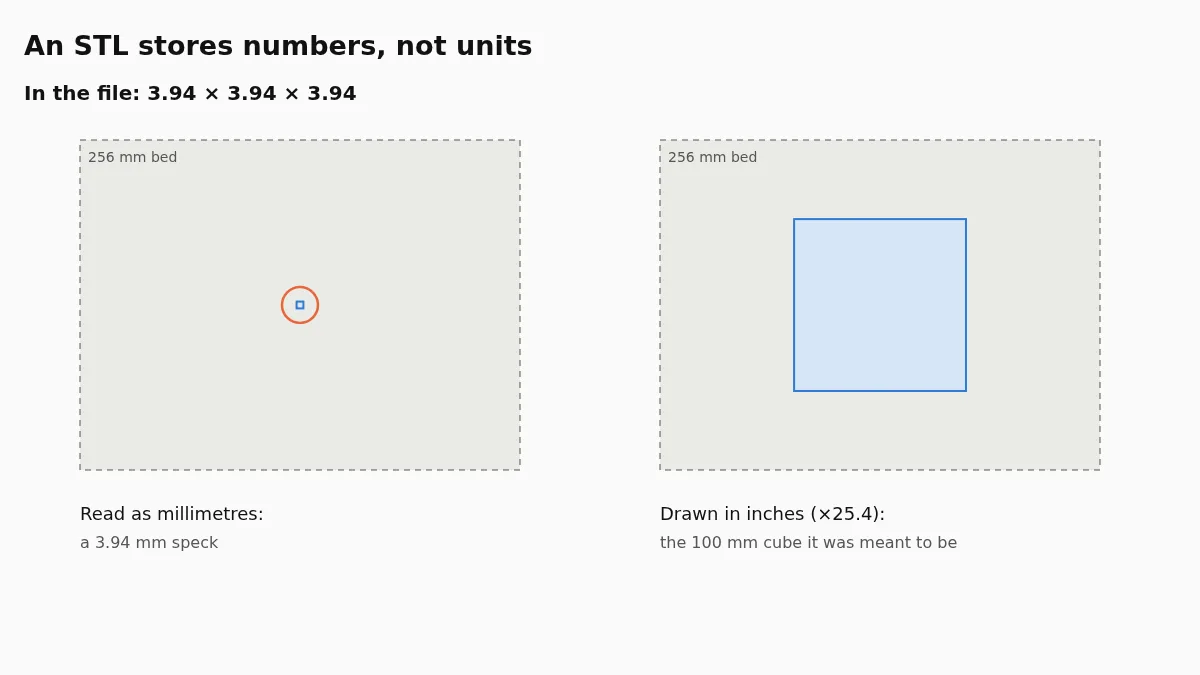
STL has no unit, so slicers read millimetres. How to tell inches from cm or metres, what PrusaSlicer and Cura detect on their own, and how to fix the file.
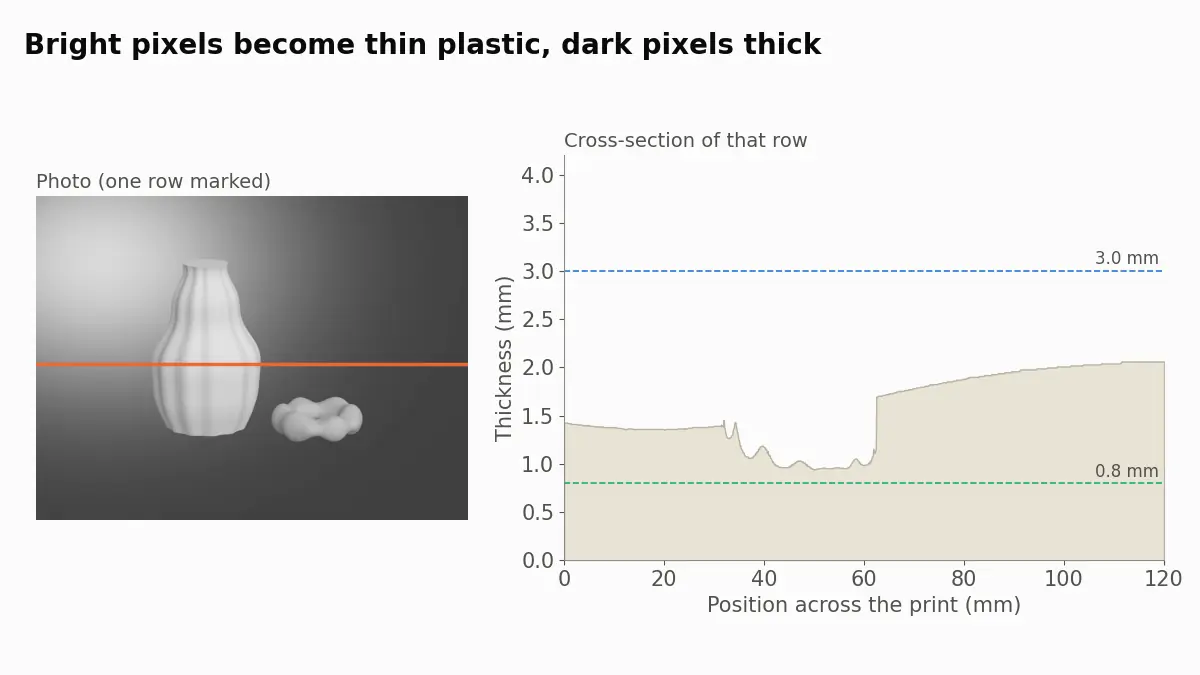
Turn a photo into a lithophane STL: which photo works, 0.8 to 3 mm thickness, print width, white PLA at 100% infill, fine layers, orientation and backlight.
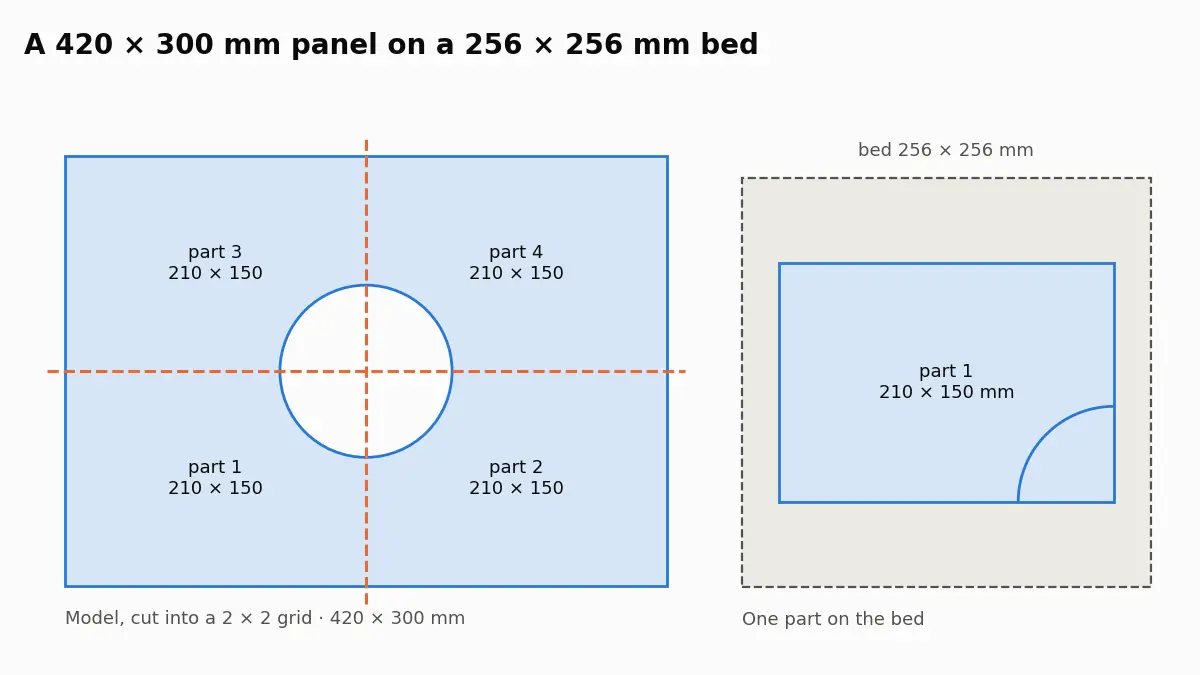
Bed sizes of common printers, how cutting an STL into parts works, margins, orientation and how to join the parts with glue, pins or dovetails.
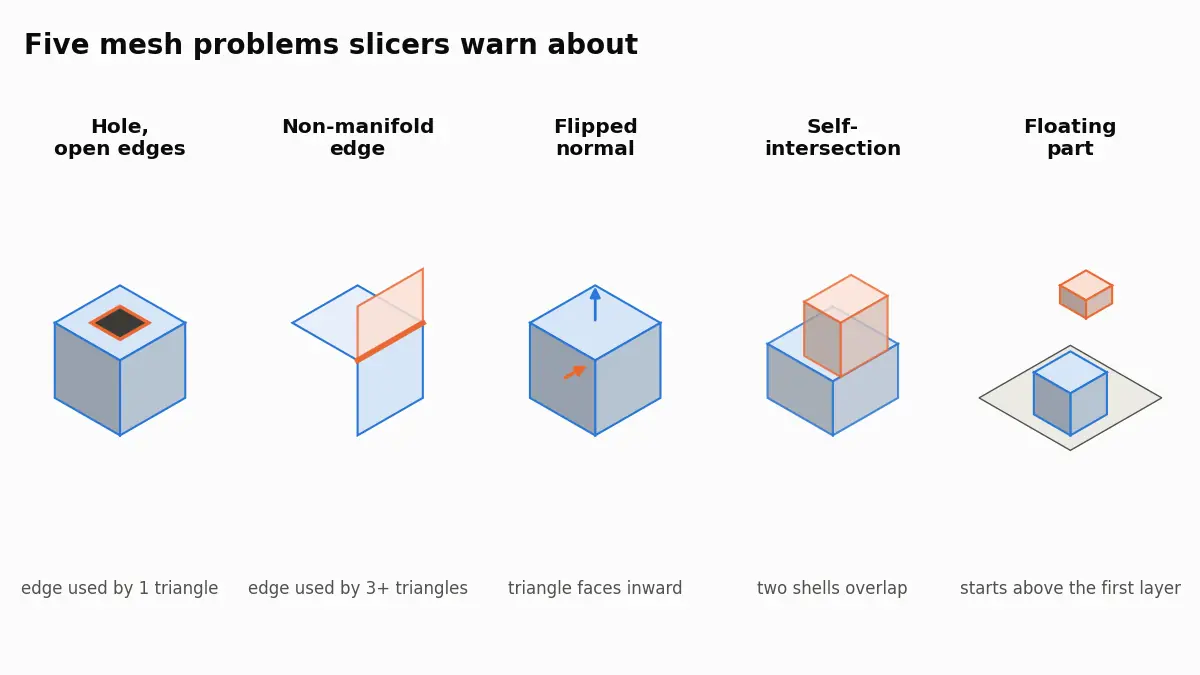
What PrusaSlicer, Bambu Studio and Cura mean by open edges, non-manifold edges, reversed faces and floating parts, and how to repair the STL behind them.
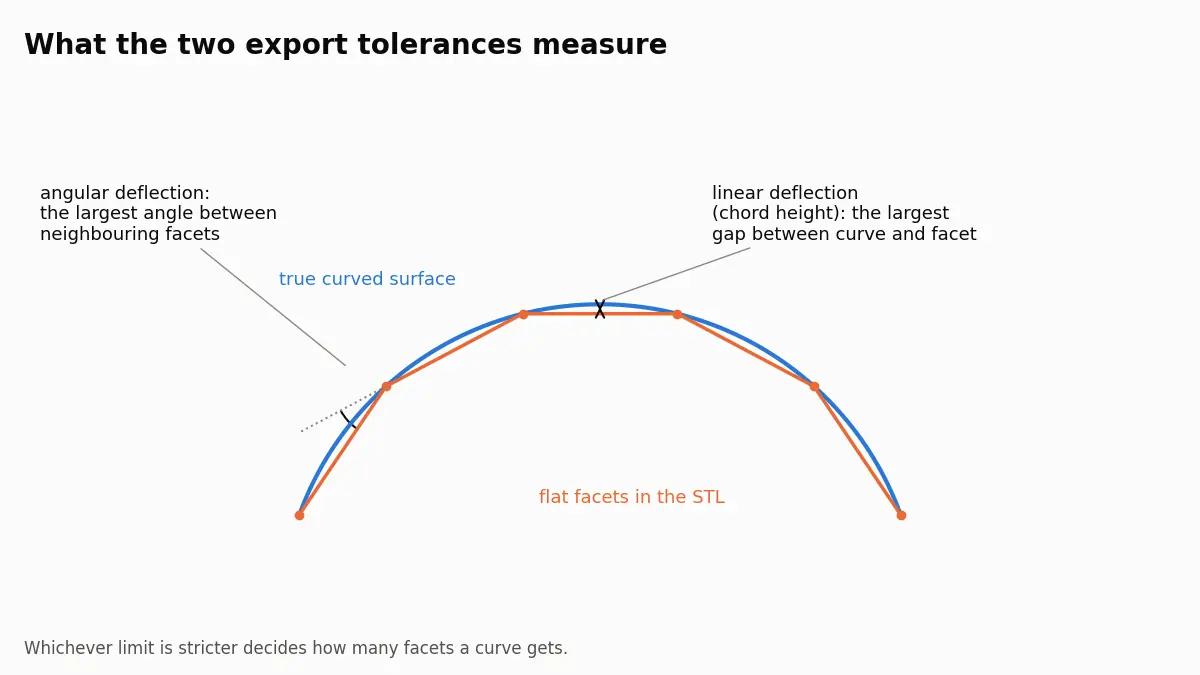
Linear and angular deflection explained with numbers, how they change file size, which preset to use for FDM or resin, and how to handle units and assemblies.
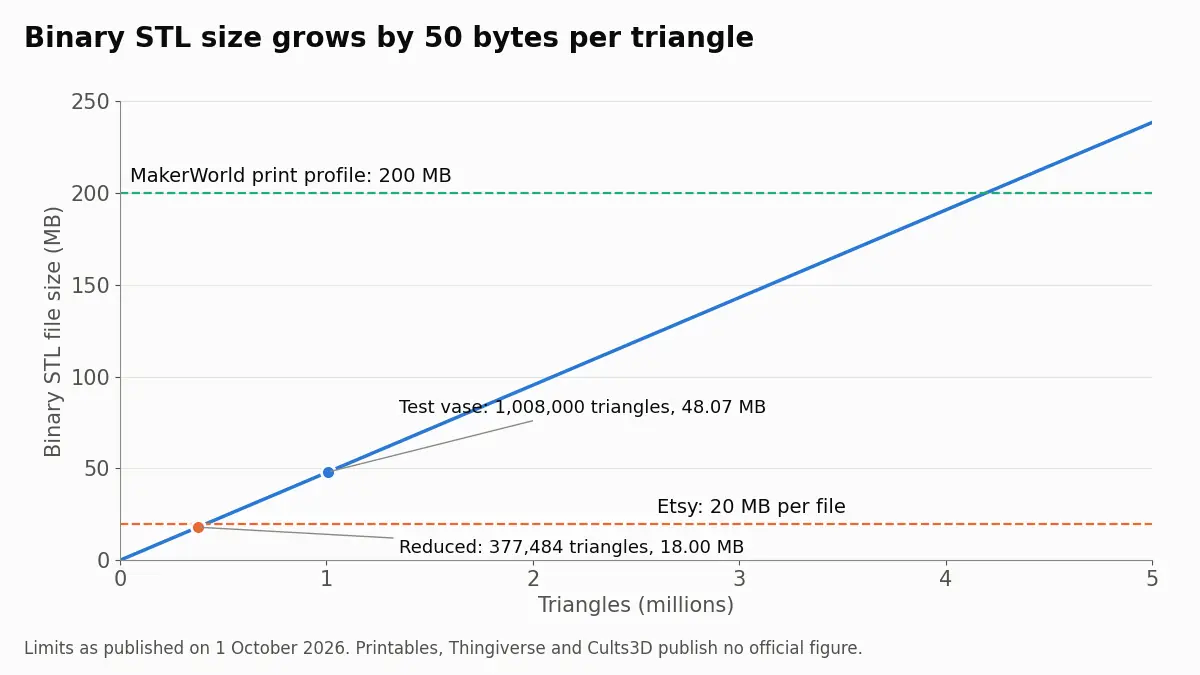
Upload limits on Etsy, MakerWorld, Printables, Thingiverse and Cults3D, checked October 2026, and how to bring an STL under them without losing detail.
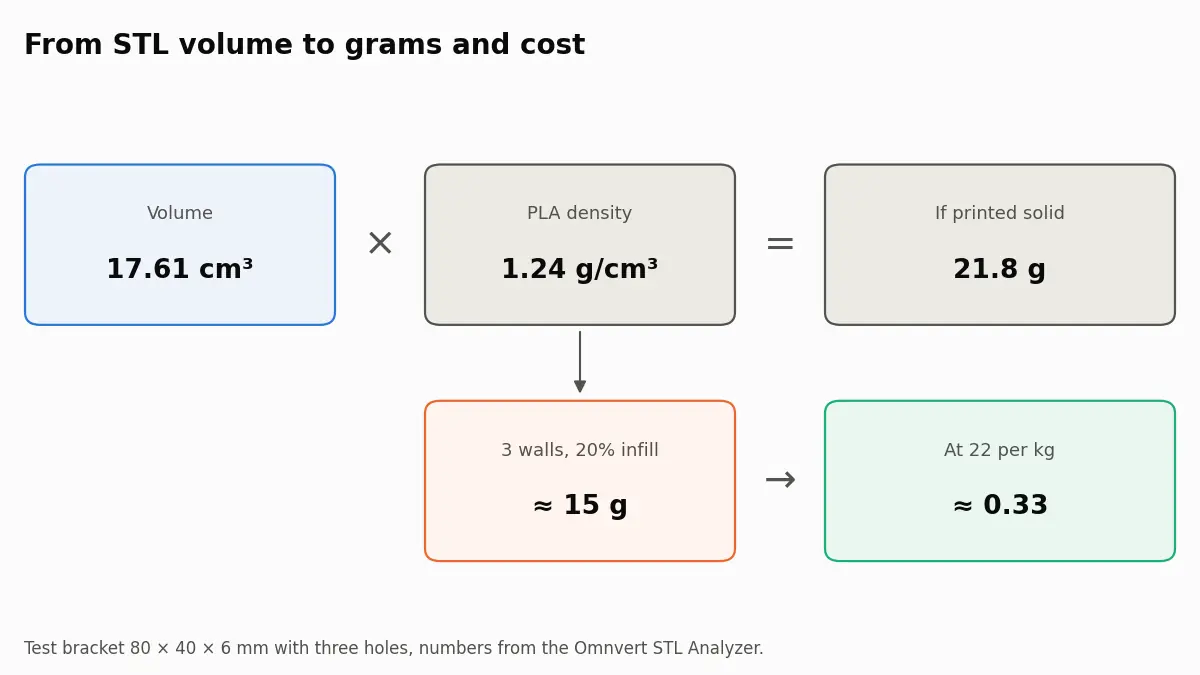
Turn an STL's volume into grams and cost: filament densities from data sheets, how walls and infill change the weight, and how far an estimate can be trusted.
Why STL files get large, how to read the triangle count straight from the file size, and what binary, re-export, decimation and 3MF each save in practice.
What each format really stores, how many bytes the same mesh costs in all three, why units decide most arguments, and the edge cases that break silently.